
Can Sugar Gliders Eat Bananas? Sugar Levels, Portions, and Diet Balance


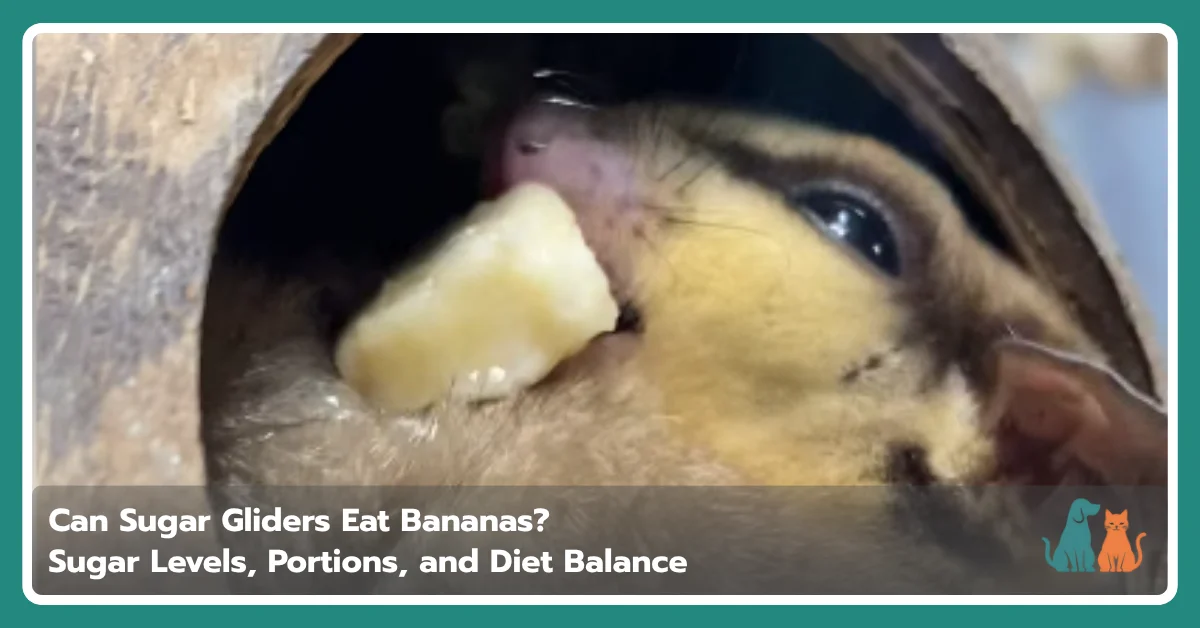
Bananas are soft, sweet, and easy for sugar gliders to eat, which makes them one of the most commonly offered fruits. While bananas are not toxic, they are naturally high in sugar and should only be offered in moderation. Sugar gliders have sensitive nutritional needs, and too much fruit can quickly lead to imbalance, obesity, and poor calcium intake if not managed carefully.
Can Sugar Gliders Eat Bananas?
Yes, sugar gliders can eat bananas, but only in small amounts as part of a balanced diet. Fresh banana can be a safe occasional treat for healthy sugar gliders when paired with proper staple foods, protein sources, and calcium-balanced nutrition.
Bananas should never become the main part of the diet because of their sugar content and poor calcium-to-phosphorus ratio.
Nutritional Content of Bananas for Sugar Gliders (per 100g)
| Nutrient | Amount (per 100g) | Notes for Sugar Gliders |
|---|---|---|
| Potassium | ~358 mg | Supports normal muscle and nerve function |
| Vitamin B6 | ~0.4 mg | Supports metabolism |
| Fiber | ~2.6 g | Helps support digestion in moderation |
| Water | ~75% | Provides hydration |
| Calcium | ~5 mg | Very low for sugar glider needs |
| Natural sugars | ~12 g | High sugar load for small animals |
Although bananas provide energy and some vitamins, they are low in calcium, which is a major concern for sugar gliders.
Health Effects of Feeding Bananas to Sugar Gliders
When offered occasionally and in proper portions, bananas may provide a few mild benefits. These effects depend entirely on moderation and overall dietary balance.
- Quick energy source
Natural carbohydrates provide fast energy for active sugar gliders.
- Digestive support
Small amounts of fiber may help support normal digestion.
- Hydration contribution
The moisture content may help support hydration.
- Calcium imbalance risk
Bananas are low in calcium and higher in phosphorus, which can contribute to nutritional imbalance if overfed.
Too much banana may increase the risk of obesity and metabolic bone disease over time when diets are not properly balanced.
How to Feed Your Sugar Glider Bananas Safely
Proper preparation and portion control are essential.
Preparing Bananas Safely for Sugar Gliders
- Use fresh ripe banana only
- Remove the peel completely before serving
- Cut into very small pieces to prevent waste and overeating
- Avoid dried banana chips, which are concentrated in sugar and often contain additives
Only plain, fresh banana should be offered.
Serving Ideas for Bananas to Sugar Gliders
- Tiny fresh slices mixed with other approved fruits
- Small enrichment treats during bonding sessions
- Occasional rotation food alongside vegetables and protein sources
Fruit should complement a balanced diet, not replace staple feeding plans.
How Much Banana Can Sugar Gliders Eat?
Portion size matters more than food choice when feeding sugary fruits.
Recommended Portion Sizes for Sugar Gliders
- Adult sugar gliders: One or two very small banana pieces occasionally
Using a Sugar Glider Calorie Calculator or balanced feeding plan can help prevent excessive sugar intake.
How Often Can Sugar Gliders Eat Bananas?
- Occasional treat only: One to two times per week
- Not suitable for daily feeding
Frequent fruit feeding may displace important protein and calcium sources.
Do Sugar Gliders Like Bananas?
Yes, many sugar gliders enjoy bananas because of their soft texture and sweetness. Still, preference should never determine feeding frequency. Sugar gliders naturally gravitate toward sweet foods and may overconsume them if given unrestricted access.
Healthy Alternatives and Expert Recommendations
Offering a variety of calcium-conscious foods supports better long-term health. A structured feeding plan, such as one outlined in a Best Sugar Glider Food Guide, helps maintain proper nutritional balance.
Safer Fruit and Vegetable Alternatives for Sugar Gliders
- Lower-sugar fruits: Blueberries, raspberries, papaya
- Vegetables: Carrots, green beans, leafy greens
These foods can help diversify the diet while supporting better nutritional balance.
Vet-Recommended Commercial Foods for Sugar Gliders
- Species-specific sugar glider staple diets
- Balanced nectar-style feeding plans
- Calcium-supported commercial sugar glider foods
Always choose diets formulated specifically for sugar gliders.
Expert Tips for Feeding Sugar Gliders Responsibly
From a veterinary nutrition perspective, treats and fruits should only make up a portion of the total diet. Protein balance, calcium intake, and proper supplementation remain critical for long-term health.
Sugar gliders are particularly vulnerable to calcium deficiencies when diets become too fruit-heavy. Over time, poor balance may contribute to metabolic bone disease and obesity.
Introduce new foods slowly and monitor stool quality, appetite, weight, and activity level. Any sudden dietary changes should be discussed with an exotic animal veterinarian.
Key Takeaways
- Can sugar gliders eat bananas? Yes, but only in moderation. Bananas can provide energy, hydration, and enrichment, but their high sugar content and low calcium levels require careful portion control.
- Always remove the peel, cut into very small pieces, and offer bananas only occasionally alongside a balanced, species-appropriate diet. When fed thoughtfully, bananas can remain a safe treat without disrupting nutritional balance, especially when backed by a structured feeding schedule outlined in our Best Sugar Glider Food Guide.
Frequently Asked Questions
Can sugar gliders eat bananas every day?
Are bananas safe for baby sugar gliders?
Can sugar gliders eat banana peels?
Do bananas cause obesity in sugar gliders?
What fruits are healthier than bananas for sugar gliders?

Dr. Aaron Mitchell, DVM
Exotic Companion Mammal Nutrition Specialist
Dr. Aaron Mitchell is a veterinarian with focused experience in exotic small mammal nutrition, including ferrets and sugar gliders.