

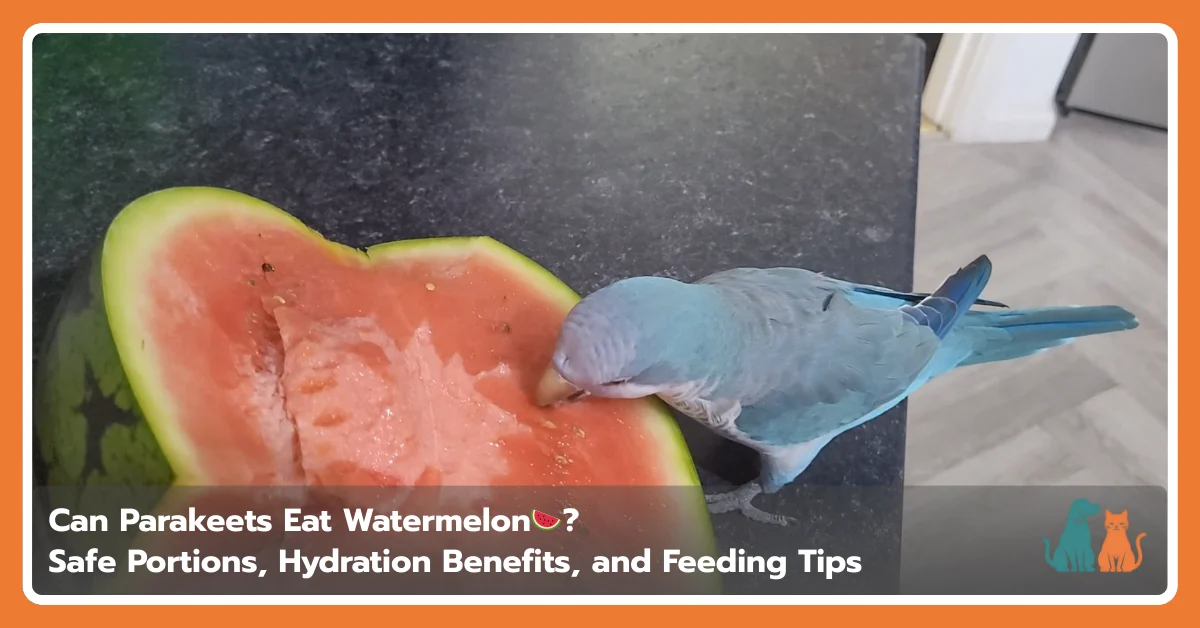
Fresh fruits are often used by parakeet owners to add variety and enrichment to daily feeding routines. Watermelon is frequently asked about because it is juicy, refreshing, and commonly available. While watermelon is not toxic to parakeets, knowing how it fits into proper parakeet nutrition helps protect digestive health, hydration balance, and overall dietary quality.
Can Parakeets Eat Watermelon?
Yes, parakeets can eat watermelon in moderation. Fresh, seedless watermelon flesh is safe for healthy birds when offered as an occasional treat. It can provide hydration and sensory enrichment, but it should never replace nutritionally complete foods or disrupt a structured budgerigar diet.
Because watermelon is mostly water and natural sugars, frequent feeding can dilute nutrient intake and reduce interest in pellets, vegetables, and other essential foods.
Nutritional Content of Watermelon for Parakeets (per 100g)
| Nutrient | Amount (per 100g) | Notes for Parakeets |
|---|---|---|
| Water | ~91% | Helps hydration but may loosen droppings |
| Vitamin C | ~8 mg | Supports immune function |
| Vitamin A | ~28 mcg | Contributes to eye and skin health |
| Fiber | ~0.4 g | Minimal digestive support |
| Natural sugars | ~6 g | Requires portion control |
While watermelon contains a few helpful vitamins, it is far less nutrient-dense than leafy greens and other fresh fruits for parakeets.
Health Effects of Feeding Watermelon to Parakeets
When fed correctly, watermelon may offer light benefits, but these should always be viewed as supplemental rather than essential.
- Hydration support
The high moisture content may help support fluid intake, especially in warmer environments or during seasonal heat. - Mild antioxidant intake
Vitamins A and C contribute modestly to immune defence and tissue health. - Dietary enrichment
The texture and juiciness encourage exploration and natural feeding behaviours. - Low-fat profile
Watermelon adds sweetness without contributing dietary fat. - Digestive imbalance risk
Overfeeding commonly leads to watery droppings and reduced appetite for balanced foods.
How to Feed Your Parakeet Watermelon Safely
Safe feeding practices are essential whenever offering watery fruits. Preparation and portion control play a larger role than the fruit itself.
Preparing Watermelon Safely for Parakeets
- Wash thoroughly to remove surface contaminants
- Remove all seeds to prevent choking
- Discard the rind, which is too tough and fibrous
- Cut into very small pieces suitable for a parakeet’s beak
- Serve fresh only, avoiding frozen or flavoured products
Plain, fresh watermelon is the only appropriate option.
Serving Ideas for Watermelon to Parakeets
- Small cubes in a clean dish to monitor intake
- Hand-feeding to control portion size
- Occasional rotation with vegetables to prevent preference fixation
Leftovers should always be removed promptly to avoid spoilage.
How Much Watermelon Can Parakeets Eat?
Portion size matters even with low-calorie foods. Excess moisture and sugar can disrupt digestion if servings are too large.
Recommended Portion Sizes for Parakeets
- One to two very small cubes, roughly the size of a fingernail clipping
This amount allows taste and enrichment without overwhelming the digestive system.
How Often Can Parakeets Eat Watermelon?
- Once or twice per week is sufficient
- Not appropriate for daily feeding, as repeated exposure increases the risk of loose stools and dietary imbalance
Treat frequency should always remain limited.
Do Parakeets Like Watermelon?
Many parakeets enjoy watermelon because of its sweetness and juicy texture. Preference, however, does not equal nutritional need. Birds often favour sweet foods, which is why structured feeding guidelines are essential for long-term health.
Healthy Alternatives and Expert Recommendations
A varied diet built around nutrient-dense foods supports better health than relying on watery fruits alone. Rotating options helps maintain balance and interest.
Safer Fruit and Vegetable Alternatives for Parakeets
- Lower sugar fruits: Blueberries, strawberries, apple slices without seeds, and pear
- Vegetables: Kale, spinach, carrots, broccoli, bell peppers
Vegetables should consistently make up a larger share of fresh foods than fruit.
Vet-Recommended Commercial Treats for Parakeets
- Pellet-based treats designed for small parrots
- Seed treats are reserved for training or bonding
- Simple commercial bird treats without added sugars or dyes
These integrate more effectively into a balanced feeding plan.
Expert Tips for Feeding Parakeet Treats Responsibly
From a veterinary nutrition perspective, treats should account for no more than ten percent of daily intake. The foundation of a healthy diet remains a complete pellet diet supported by vegetables and clean water.
Monitoring portions is easier when owners understand daily energy needs. Tools like a Parakeet Nutrition Calculator can help guide appropriate treat limits and prevent gradual overfeeding.
Birds with obesity, liver disease, or chronic digestive sensitivity may need stricter fruit limits or complete avoidance of high-moisture treats.
Key Takeaways
Parakeets can eat watermelon safely when it is seedless, freshly prepared, and offered in very small amounts. While watermelon provides hydration and enrichment, it is nutritionally light and should never replace balanced foods.
For long-term health, watermelon should be paired with a structured diet based on pellets, vegetables, and guidance from a Best Parakeets Food resource. Used responsibly, it can be a refreshing occasional treat without compromising nutritional balance.
Frequently Asked Questions
Can parakeets eat watermelon every day?
No. Daily feeding often leads to watery droppings and reduced intake of essential nutrients.
Is watermelon safe for baby parakeets?
It is best avoided until birds are fully weaned and consistently eating a complete diet.
Can parakeets eat watermelon seeds?
No. Seeds must always be removed due to choking risk.
Does watermelon help hydrate parakeets?
Yes, but fresh drinking water should always be the primary hydration source.
Is watermelon healthier than other fruits for parakeets?
It is lighter in calories but less nutrient-dense than berries and many vegetables.
