

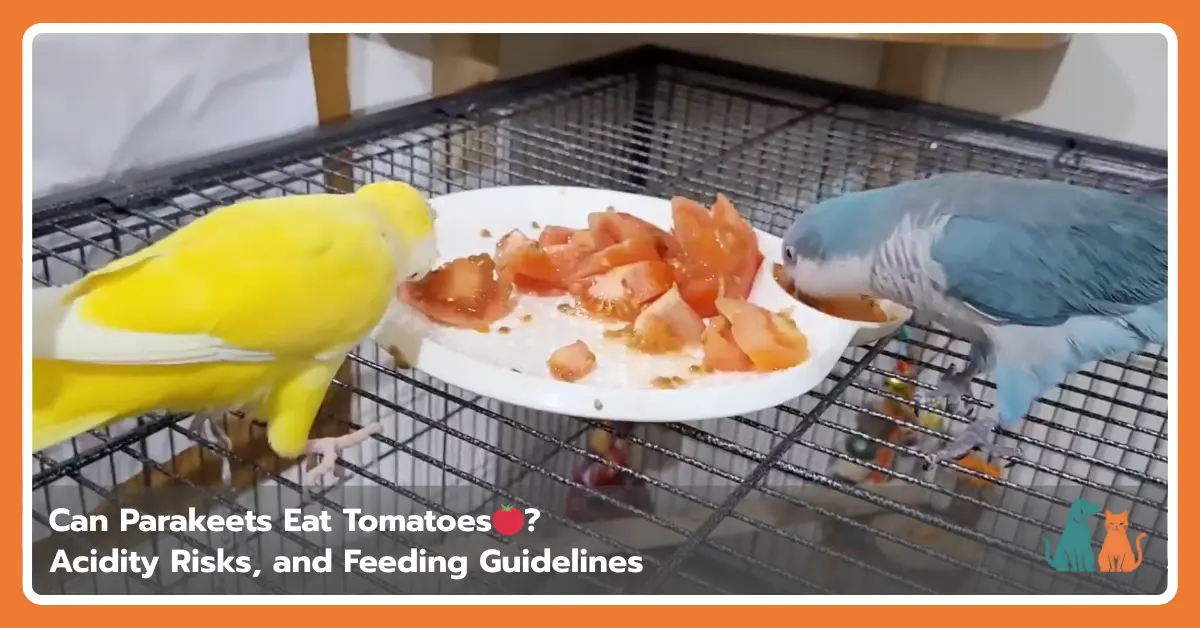
Tomatoes are common in many households, which often leads parakeet owners to wonder if a small bite is safe to share. While tomatoes contain beneficial nutrients, they also have properties that can cause problems for small birds if fed incorrectly. Knowing which parts are safe, how much is appropriate, and how often tomatoes can be offered is essential for protecting your parakeet’s digestive health.
Can Parakeets Eat Tomatoes?
Yes, parakeets can eat tomatoes, but only the ripe flesh and only in very small amounts. Tomatoes are acidic, and excessive intake can irritate the digestive tract. The leaves, stems, and unripe green tomatoes are unsafe and should never be offered, as they contain solanine, which is toxic to birds.
Nutritional Content of Tomatoes for Parakeets (per 100g)
| Nutrient | Amount (per 100g) | Notes for Parakeets |
|---|---|---|
| Vitamin C | ~13.7 mg | Supports immune health in moderation |
| Vitamin A (beta-carotene) | ~42 mcg | Supports vision and skin health |
| Potassium | ~237 mg | Supports muscle and nerve function |
| Fiber | ~1.2 g | Aids digestion in very small amounts |
| Water | ~95% | Adds hydration but may loosen droppings |
| Natural acids | Moderate | Excess may irritate the crop and gut |
Because of their high water and acid content, tomatoes should never be a frequent treat.
Health Effects of Feeding Tomatoes to Parakeets
When fed occasionally and in tiny portions, tomatoes may offer limited benefits. These effects depend entirely on careful preparation and moderation.
- Hydration support
Tomatoes contain a high percentage of water, which may support hydration in warm conditions. - Vitamin contribution
Small amounts provide vitamin C and beta-carotene that support immune and eye health. - Digestive sensitivity risk
The natural acidity can irritate the digestive tract if portions are too large. - Loose droppings
Excess tomato intake may cause watery droppings due to water and acid content.
How to Feed Your Parakeet Tomatoes Safely
Safe tomato feeding focuses on removing harmful parts and limiting exposure to acidity.
Preparing Tomatoes Safely for Parakeets
- Use only ripe red tomatoes
- Remove all leaves, stems, and vines completely
- Wash thoroughly to remove pesticides
- Cut into very small pieces
- Avoid canned, cooked, or seasoned tomatoes
Only fresh, plain tomato flesh should ever be offered.
Serving Ideas for Tomatoes to Parakeets
- Tiny fresh pieces mixed with vegetables
- Occasional enrichment treat offered by hand
- Rotation feeding paired with lower-acid produce
Remove uneaten tomato promptly to prevent spoilage.
How Much Tomato Can Parakeets Eat?
Portion control is critical when feeding tomatoes. Even healthy birds can develop digestive irritation if acidic foods are overfed.
Recommended Portion Sizes for Parakeets
- All parakeets: One or two very small pieces of tomato flesh
Using a Parakeet Nutrition Calculator can help ensure treats stay within appropriate daily limits.
How Often Can Parakeets Eat Tomatoes?
- Very occasional treat: Once every one to two weeks
- Not suitable for frequent feeding
Tomatoes should never be part of a daily fruit rotation.
Do Parakeets Like Tomatoes?
Some parakeets enjoy the soft texture, while others avoid acidic flavors. Preference varies widely and should never influence feeding frequency.
Healthy Alternatives and Expert Recommendations
Offering a variety of lower-acid foods supports enrichment without stressing the digestive system. A balanced approach is emphasised in the Best Parakeets Food Guide.
Safer Fruit and Vegetable Alternatives for Parakeets
- Lower-acid fruits: Apples (seedless), blueberries, bananas
- Vegetables: Carrots, broccoli florets, leafy greens, bell peppers
These options are gentler and better suited for regular rotation.
Vet-Recommended Commercial Treats for Parakeets
- Vegetable-based formulated treats
- Limited-ingredient bird snacks
- Foraging treats without added sugars or salts
Always review ingredient labels carefully.
Expert Tips for Feeding Parakeet Treats Responsibly
From a veterinary nutrition perspective, treats should make up no more than five percent of a parakeet’s total daily intake. The core diet should always consist of a complete, formulated parakeet food supported by fresh vegetables and clean water.
Introduce acidic foods cautiously and monitor droppings, appetite, and behaviour. Any signs of digestive upset warrant removing the food and consulting an avian veterinarian.
Birds with crop sensitivity, liver disease, or chronic digestive issues may need to avoid tomatoes entirely.
Key Takeaways
Can parakeets eat tomatoes? Yes, but only ripe tomato flesh, in very small portions, and only occasionally. Leaves, stems, and unripe tomatoes are unsafe and must always be avoided.
When prepared correctly and fed sparingly, tomatoes can be an occasional enrichment food without disrupting nutritional balance.
Frequently Asked Questions
Can parakeets eat cherry tomatoes?
Yes, but only a very small piece of ripe flesh with all stems removed.
Are tomato seeds safe for parakeets?
Seeds are generally safe in tiny amounts, but portions should remain minimal.
Can parakeets eat cooked tomatoes?
No. Cooked or seasoned tomatoes may contain additives that are unsafe for birds.
Can baby parakeets eat tomatoes?
No. Young birds should not receive acidic foods until fully weaned and stable on a balanced diet.
What should I do if my parakeet has diarrhea after eating tomatoes?
Stop tomato feeding and consult an avian veterinarian if symptoms persist.
