

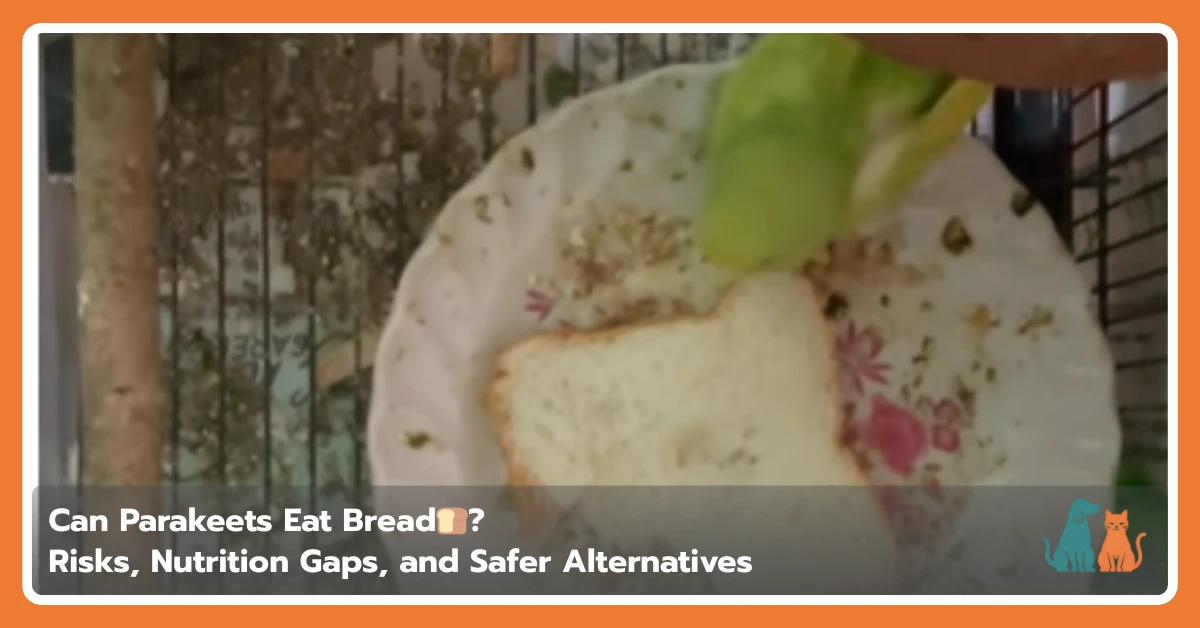
Bread is a common household food, which makes it tempting to share a small bite with a parakeet. Many birds will eagerly nibble at bread, but interest does not always equal safety. Bread offers very little nutritional value for birds and can interfere with proper diet balance when fed incorrectly. Knowing when bread may be tolerated and why it should remain limited helps protect your parakeet’s long-term health.
Can Parakeets Eat Bread?
Parakeets can eat bread in very small amounts, but it is not a recommended food. Plain bread is not toxic, yet it provides empty calories with little nutritional benefit. Regular feeding can displace essential nutrients from a balanced diet and contribute to weight gain or digestive issues.
Bread should never be a routine food and should only be offered, if at all, as a rare treat.
Nutritional Content of Bread for Parakeets (per 100g, white bread)
| Nutrient | Amount (per 100g) | Notes for Parakeets |
|---|---|---|
| Carbohydrates | ~49 g | Quickly converts to energy and fat |
| Protein | ~9 g | Low quality and incomplete |
| Fiber | ~2.7 g | Minimal digestive benefit |
| Sodium | ~490 mg | Excess can stress kidneys |
| Added sugars | Varies | Can contribute to obesity |
| Essential vitamins | Low | Lacks key bird nutrients |
Because parakeets have very small calorie requirements, even a small piece of bread can crowd out more nutrient-dense foods.
Health Effects of Feeding Bread to Parakeets
When offered occasionally and in tiny portions, bread is unlikely to cause immediate harm. Long-term or frequent feeding poses clear risks.
- Poor nutrient density
Bread lacks essential vitamins, minerals, and amino acids needed for feather, bone, and immune health. - Weight gain risk
Refined carbohydrates can contribute to fat accumulation when fed regularly. - Digestive issues
Yeast, additives, or excess starch may cause bloating or loose droppings. - Increased sodium exposure
Many breads contain salt levels that are inappropriate for birds.
How to Feed Your Parakeet Bread Safely
If bread is offered at all, preparation and portion control are critical.
Preparing Bread Safely for Parakeets
- Use plain, unseasoned bread only
- Avoid butter, spreads, garlic, onions, or sugar
- Skip toasted, flavored, or sweetened varieties
- Tear into very small pieces
- Never offer moldy or stale bread
Whole grain bread is slightly better than white bread, but it is still nutritionally limited.
Serving Ideas for Bread to Parakeets
- Tiny crumbs offered by hand as a rare treat
- Occasional enrichment mixed with vegetables
- Training reward used sparingly
Any uneaten bread should be removed quickly to prevent spoilage.
How Much Bread Can Parakeets Eat?
Bread portions should always remain extremely small.
Recommended Portion Sizes for Parakeets
- All parakeets: A piece no larger than a grain of rice
Using a Parakeet Nutrition Calculator can help visualise how quickly low-nutrient treats add to daily intake.
How Often Can Parakeets Eat Bread?
- Rarely: No more than once per month
- Not suitable for weekly feeding
Bread should never replace fruits, vegetables, or formulated diets.
Do Parakeets Like Bread?
Many parakeets enjoy bread because of its soft texture. This preference is driven by carbohydrates rather than nutritional need, which is why limits are essential.
Healthy Alternatives and Expert Recommendations
Instead of bread, offering foods that provide real nutritional value supports better health and enrichment. This approach aligns with guidance found in the Best Parakeets Food Guide.
Safer Fruit and Vegetable Alternatives for Parakeets
- Fruits: Apples (seedless), blueberries, bananas
- Vegetables: Leafy greens, carrots, broccoli, zucchini
These options deliver vitamins and minerals without excess sodium or empty calories.
Vet-Recommended Commercial Treats for Parakeets
- Formulated bird treats with controlled ingredients
- Vegetable-based foraging snacks
- Seed treats reserved strictly for enrichment
Always check labels and avoid artificial colors or added sugars.
Expert Tips for Feeding Parakeet Treats Responsibly
From an avian nutrition perspective, treats should make up no more than five percent of a parakeet’s daily diet. A complete, species-appropriate pellet or formulated food should remain the foundation, supported by fresh vegetables and clean water.
Foods like bread can easily disrupt nutrient balance if offered too often. Monitor droppings, activity level, and body condition after any new food. Birds with weight concerns or digestive sensitivity should avoid bread entirely, and veterinary guidance is recommended when questions arise.
Key Takeaways
Can parakeets eat bread? Yes, but only rarely and in very small amounts. Bread offers minimal nutritional benefit and carries risks when fed too often.
When limited to an occasional crumb and never used as a staple, bread is unlikely to cause harm. Nutrient-dense foods should always remain the priority.
Frequently Asked Questions
Can parakeets eat bread every day?
No. Daily bread feeding increases the risk of obesity and nutrient deficiencies.
Is whole wheat bread better for parakeets than white bread?
Whole wheat is slightly better, but still not recommended as a regular food.
Can parakeets eat toast?
Plain toast is not toxic, but it offers no added benefit over fresh bread.
Can parakeets eat bread with butter or jam?
No. Added fats and sugars are unsafe for birds.
What should I do if my parakeet eats too much bread?
Remove bread from the diet and monitor droppings. Contact an avian veterinarian if symptoms develop.
