
Can Ferrets Eat Cat Food? Protein Quality, Diet Needs, and Safety


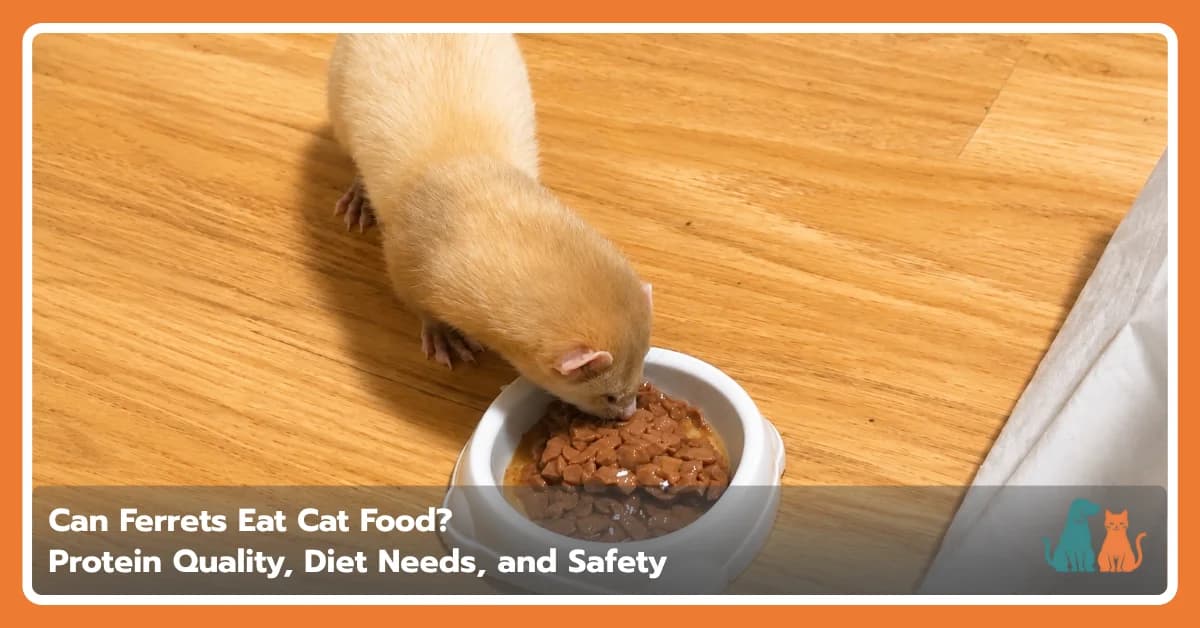
Ferrets have very different dietary needs than many other pets. As obligate carnivores, they rely on animal-based protein and fat to stay healthy. Because of this, many ferret owners wonder whether cat food can be used as part of a ferret's diet. The answer depends largely on the type of cat food being offered and the quality of its ingredients.
Can Ferrets Eat Cat Food?
Yes, ferrets can eat certain types of cat food, and many high-quality cat foods are commonly used by ferret owners. Since cats and ferrets are both obligate carnivores, their nutritional requirements are similar in several important ways.
However, not all cat foods are suitable. Ferrets require very high levels of animal protein, moderate fat, and minimal carbohydrates. Low-quality cat foods that rely heavily on plant ingredients may not provide optimal nutrition.
Nutritional Content of High-Quality Cat Food for Ferrets
| Nutrient | Recommended Range | Notes for Ferrets |
|---|---|---|
| Protein | 35-45%+ | Primary nutrient for muscle maintenance |
| Fat | 15-25% | Important source of energy |
| Carbohydrates | Low | Ferrets digest carbs poorly |
| Fiber | Minimal | Excess fiber provides little benefit |
| Moisture | Varies | Wet foods contain more water |
Ferrets have short digestive tracts and process meat-based nutrients much more efficiently than plant-based ingredients.
Health Effects of Feeding Cat Food to Ferrets
When the right formula is selected, cat food can support many aspects of ferret health.
- Supports lean muscle mass
High-quality animal protein helps maintain healthy body condition.
- Provides essential energy
Ferrets have fast metabolisms and depend on dietary fat for energy.
- Convenient and widely available
Premium cat foods are often easier to find than specialized ferret diets.
- Potential risks with poor-quality formulas
Foods high in carbohydrates, corn, wheat, or plant proteins may not meet a ferret's nutritional needs.
The ingredient list matters far more than the product label alone.
How to Feed Your Ferret Cat Food Safely
Choosing the right product is the most important step.
Choosing Cat Food Safely for Ferrets
- List animal protein as the first ingredient
- Contain at least 35% protein
- Provide moderate fat levels
- Contain minimal carbohydrates
- Avoid excessive fillers and artificial additives
Premium kitten food is often recommended because it typically contains higher protein and fat levels than standard adult cat food.
Serving Ideas for Cat Food to Ferrets
- Dry kibble available throughout the day
- Occasional wet food for variety and hydration
- Mixing compatible formulas during transitions
Ferrets naturally prefer eating multiple small meals throughout the day.
How Much Cat Food Can Ferrets Eat?
Portion needs vary based on age, activity level, and body condition.
Recommended Portion Sizes for Ferrets
- Most healthy adult ferrets benefit from free-access feeding
- Growing kits and active ferrets often require additional calories
- Food intake naturally fluctuates throughout the year
Using a Ferret Calorie Calculator can help estimate daily calorie requirements and monitor body condition more accurately.
How Often Can Ferrets Eat Cat Food?
- Daily feeding is acceptable
- Many ferrets thrive on suitable cat food long-term
- Food should generally remain available throughout the day
Unlike some pets, ferrets should not go extended periods without access to food.
Do Ferrets Like Cat Food?
Yes. Most ferrets readily accept high-quality cat food because the meat-based ingredients align closely with their natural dietary preferences. Many ferrets enjoy both dry and wet formulas.
Healthy Alternatives and Expert Recommendations
A balanced feeding plan should focus on high-quality animal protein. Resources such as a Best Ferret Food Guide can help owners compare ingredients and identify nutritionally appropriate foods.
Safer Protein-Rich Alternatives for Ferrets
- Ferret-specific commercial diets
- Premium kitten food
- Freeze-dried meat treats
- Small amounts of cooked meat
These foods better reflect the nutritional profile ferrets evolved to eat.
Vet-Recommended Commercial Foods for Ferrets
- Ferret-formulated kibble
- High-protein kitten foods
- Meat-based carnivore diets
Always review ingredient labels before selecting a product.
Expert Tips for Feeding Ferrets Responsibly
From a veterinary nutrition perspective, protein quality is one of the most important aspects of ferret feeding. Animal-based proteins and fats should provide the majority of calories, while carbohydrates should remain as low as possible.
Introduce any new food gradually over several days to reduce digestive upset. Monitor weight, stool quality, energy level, and coat condition whenever dietary changes are made.
Because ferrets are prone to obesity and insulin-related health issues, long-term diet quality plays a significant role in overall wellness.
Key Takeaways
- Can ferrets eat cat food? Yes, but only if it is high-quality and rich in animal protein.
- Premium kitten food is often a better choice than standard adult cat food due to higher protein and fat requirements.
- Low-carbohydrate, meat-based formulas best support ferret health, while poor-quality cat foods containing excessive plant-based fillers should be strictly avoided.
- When planning diet transitions, refer to our Best Ferret Food Guide to compare the highest-quality grain-free options available.
Frequently Asked Questions
Can ferrets eat cat food every day?
Is kitten food better than adult cat food for ferrets?
Can ferrets eat wet cat food?
What type of cat food is best for ferrets?
Can ferrets eat grain-free cat food?

Dr. Aaron Mitchell, DVM
Exotic Companion Mammal Nutrition Specialist
Dr. Aaron Mitchell is a veterinarian with focused experience in exotic small mammal nutrition, including ferrets and sugar gliders.