
Can Ducks Eat Bread? Nutritional Concerns, Alternatives, and Feeding


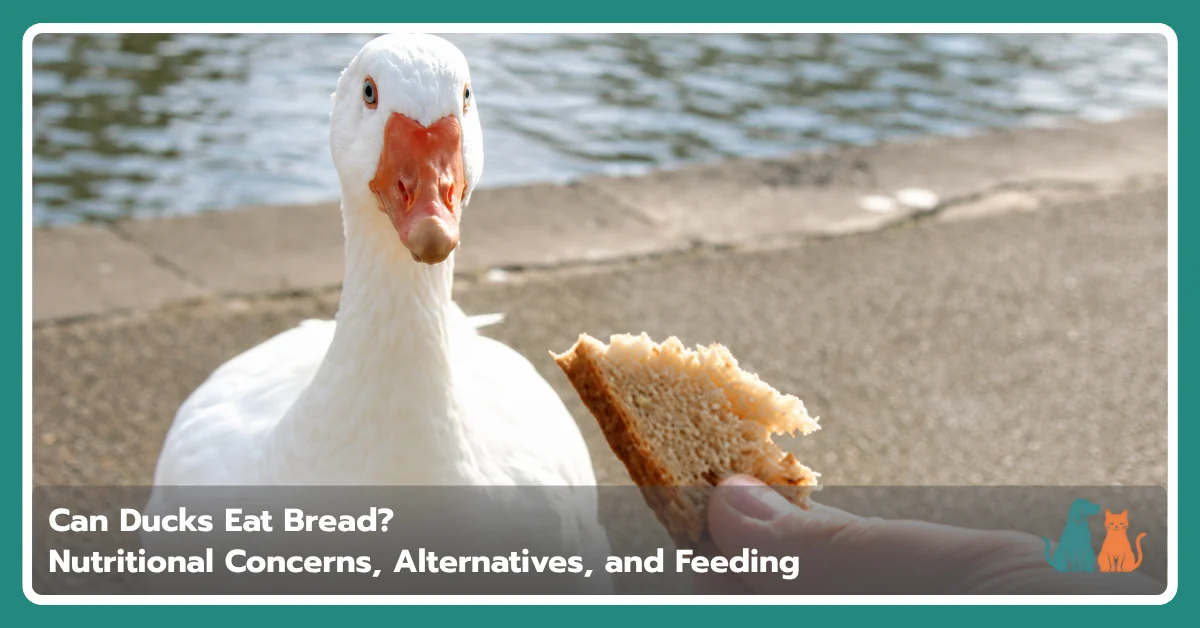
Feeding bread to ducks has been a common tradition for generations, especially in parks and ponds. While ducks will often eagerly eat bread, that does not mean it is a healthy food choice. Understanding how bread affects a duck's nutrition can help owners and wildlife enthusiasts make better feeding decisions.
Can Ducks Eat Bread?
Yes, ducks can eat bread, but it is not recommended. Bread is not toxic to ducks, and a small amount is unlikely to cause immediate harm. However, bread provides very little nutritional value and can fill ducks up before they consume foods that supply the nutrients they actually need.
For both pet ducks and wild ducks, bread should be avoided whenever possible.
Nutritional Content of White Bread for Ducks (per 100g)
| Nutrient | Amount (per 100g) | Notes for Ducks |
|---|---|---|
| Calories | ~265 kcal | High energy with limited nutrition |
| Carbohydrates | ~49 g | Primary component |
| Protein | ~9 g | Lower quality protein source |
| Fat | ~3 g | Minimal contribution |
| Fiber | ~2.7 g | Limited digestive benefit |
| Vitamins & Minerals | Low | Not a balanced food for ducks |
Bread supplies calories but lacks many of the nutrients ducks need for healthy growth, feather development, and overall wellness.
Health Effects of Feeding Bread to Ducks
Although ducks may enjoy bread, regular feeding can create several problems.
- Poor nutritional value
Bread does not provide the balanced nutrients ducks require.
- Reduced appetite for healthier foods
Ducks may fill up on bread and eat less nutritious food.
- Weight gain risk
Excess calories can contribute to obesity in pet ducks.
- Environmental concerns
Uneaten bread can pollute ponds and attract pests.
For these reasons, bread is generally considered a poor choice for routine feeding.
How to Feed Bread to Ducks Safely
If bread is offered, it should be treated as a rare exception rather than a regular snack.
Preparing Bread Safely for Ducks
- Use plain bread only
- Offer very small pieces
- Avoid moldy bread
- Do not use bread containing chocolate, raisins, garlic, or onions
- Avoid heavily processed or sweetened baked goods
Fresh, plain bread is safer than flavored varieties.
Serving Ideas for Bread to Ducks
- Tiny pieces mixed with healthier foods
- Rare enrichment treat
- Occasional feeding only
Healthier alternatives are strongly preferred.
How Much Bread Can Ducks Eat?
Bread should never become a meaningful part of a duck's diet.
Recommended Portion Sizes for Ducks
- A few small crumbs or tiny pieces only
- Treats should remain a very small percentage of daily intake
A Waterfowl Calorie Calculator can help owners understand appropriate calorie intake and avoid overfeeding treats.
How Often Can Ducks Eat Bread?
- Rarely, if at all
- Not recommended as a regular treat
- Healthier foods should be prioritized
Routine bread feeding is discouraged by many waterfowl and wildlife experts.
Do Ducks Like Bread?
Yes, most ducks readily eat bread. Its soft texture and carbohydrate content make it appealing. However, preference does not equal nutritional value, and ducks often enjoy many healthier foods as well.
Healthy Alternatives and Expert Recommendations
Providing nutrient-rich foods helps support long-term health and natural feeding behaviors. Following a Best Waterfowl Food Guide can help owners choose foods that better meet a duck's nutritional needs.
Safer Alternatives to Bread for Ducks
- Duck pellets or waterfowl feed
- Peas
- Corn in moderation
- Chopped lettuce
- Cucumber
- Oats
- Watermelon
- Mealworms
These foods generally provide more nutritional value than bread.
Vet-Recommended Commercial Foods for Ducks
- Complete duck feed
- Waterfowl pellets
- Age-appropriate duck diets
Commercial diets should provide the majority of daily nutrition.
Expert Tips for Feeding Ducks Responsibly
From a nutrition perspective, ducks thrive on balanced diets that provide adequate protein, vitamins, minerals, and energy. Foods that supply mostly calories without meaningful nutrients can interfere with healthy growth and body condition.
For pet ducks, complete waterfowl feed should form the foundation of the diet. For wild ducks, feeding is often unnecessary because natural foraging typically provides suitable nutrition.
When treats are offered, choose options that complement rather than replace a balanced diet.
Key Takeaways
- Ducks can technically consume bread, but it is heavily discouraged as it offers almost no real nutritional value.
- Regularly feeding ducks bread fills them up on empty carbs, reducing their natural forage intake and polluting waterways.
- Waterfowl-safe pellets, oats, peas, and chopped greens are highly preferred, healthier alternatives.
- For expert advice on waterfowl nutritional requirements and balanced feeding schedules, check out our Best Waterfowl Food Guide.
Frequently Asked Questions
Can ducks eat bread every day?
Is bread toxic to ducks?
Can ducklings eat bread?
What is better than bread for ducks?
Why do ducks like bread if it isn't healthy?

Dr. Richie Carter, DVM
Avian Nutrition Specialist
Dr. Richie Carter is a veterinarian with specialized experience in bird care, nutrition, and preventative health.