

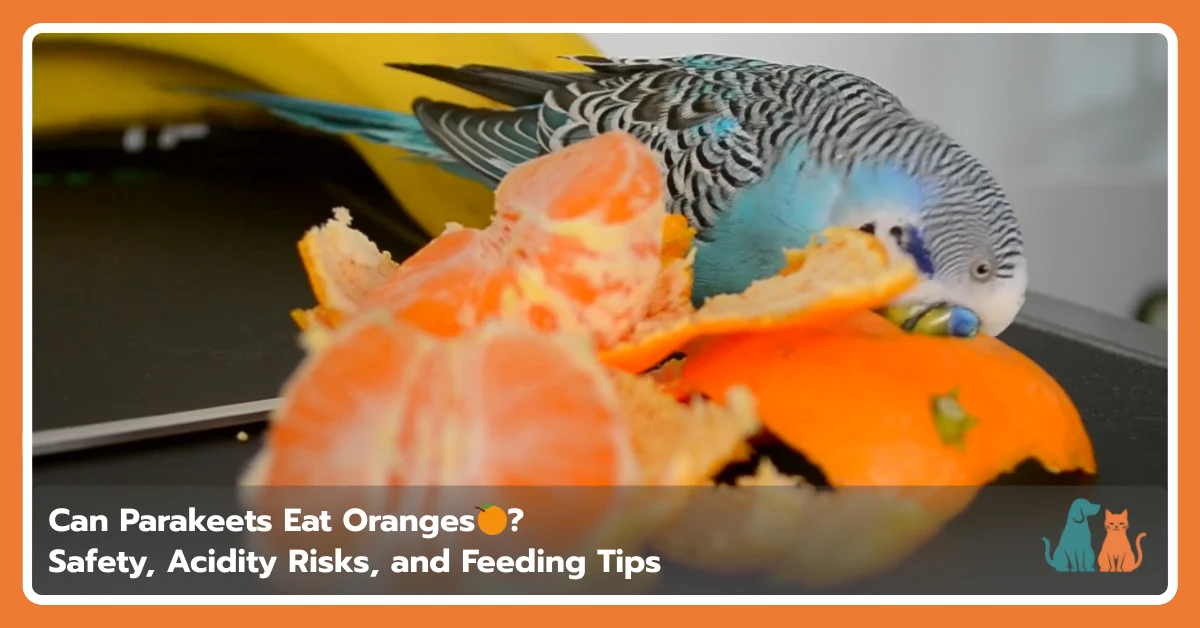
Oranges are often associated with vitamin C and freshness, which makes many parakeet owners curious about sharing a small piece. While oranges are not toxic to parakeets, they are naturally acidic and sugary, which means they must be handled with care. Understanding when oranges are appropriate and how to feed them safely helps protect your parakeet’s digestive comfort and long-term health.
Can Parakeets Eat Oranges?
Yes, parakeets can eat oranges, but only in very small amounts and only on occasion. The flesh of ripe oranges is safe, but the acidity can irritate the crop and digestive tract if portions are too large or offered too often. Orange peels should always be avoided due to pesticide residue and concentrated oils.
Nutritional Content of Oranges for Parakeets (per 100g)
| Nutrient | Amount (per 100g) | Notes for Parakeets |
|---|---|---|
| Vitamin C | ~53 mg | Supports immune health when fed sparingly |
| Fiber | ~2.4 g | Aids digestion in tiny amounts |
| Potassium | ~181 mg | Supports muscle and nerve function |
| Water | ~87% | Contributes to hydration |
| Natural sugars | ~9 g | Can contribute to weight gain if overfed |
| Citric acid | Moderate | May irritate the digestive tract |
Because parakeets are small birds, even a single bite delivers a noticeable acid and sugar load.
Health Effects of Feeding Oranges to Parakeets
When offered occasionally and in very small portions, oranges may provide limited benefits. These effects rely entirely on moderation.
- Immune support
Oranges provide vitamin C, which supports normal immune function in small amounts. - Hydration contribution
The high water content may help with hydration, especially in warm environments. - Digestive irritation risk
Excess acidity can irritate the crop and intestines, leading to discomfort. - Loose droppings
Too much orange may cause watery droppings due to acid and moisture.
How to Feed Your Parakeet Oranges Safely
Safe orange feeding focuses on minimizing acidity exposure and avoiding unsafe parts of the fruit.
Preparing Oranges Safely for Parakeets
- Use only fresh, ripe oranges
- Remove the peel and white pith completely
- Wash thoroughly to remove surface chemicals
- Cut into very small pieces
- Never offer juice, dried oranges, or sweetened products
Only plain orange flesh should ever be offered.
Serving Ideas for Oranges to Parakeets
- Tiny fresh pieces are offered by hand
- Occasional enrichment treat mixed with vegetables
- Rotation feeding alongside lower-acid fruits
Remove uneaten orange promptly to prevent spoilage.
How Much Orange Can Parakeets Eat?
Portion size is far more important than food choice when feeding citrus fruits.
Recommended Portion Sizes for Parakeets
- All parakeets: One very small cube or sliver of orange flesh
Using a Parakeet Food Calculator can help visualise how quickly fruit treats add to daily intake.
How Often Can Parakeets Eat Oranges?
- Occasional treat only: Once every one to two weeks
- Not suitable for frequent feeding
Regular citrus exposure increases digestive irritation risk.
Do Parakeets Like Oranges?
Some parakeets enjoy the juicy texture, while others avoid sour flavours entirely. Preference varies and should never guide feeding frequency.
Healthy Alternatives and Expert Recommendations
Providing variety without relying on acidic fruit supports both nutrition and enrichment. This balanced approach aligns with guidance found in a Parakeet’s Food Guide.
Safer Fruit and Vegetable Alternatives for Parakeets
- Lower-acid fruits: Apples (seedless), blueberries, bananas
- Vegetables: Carrots, leafy greens, broccoli florets, bell peppers
These options are better suited for regular rotation.
Vet-Recommended Commercial Treats for Parakeets
- Vegetable-based formulated bird treats
- Limited-ingredient foraging snacks
- Plain seed blends designed for enrichment only
Check ingredient labels and avoid added sugars or artificial colors.
Expert Tips for Feeding Parakeet Treats Responsibly
From a veterinary nutrition standpoint, treats should make up no more than five percent of a parakeet’s daily diet. A complete, formulated parakeet food should always serve as the nutritional foundation, supported by fresh vegetables and clean water.
Introduce acidic foods slowly and observe droppings, appetite, and behaviour. Any signs of digestive upset mean the food should be removed immediately. Birds with crop sensitivity or chronic digestive conditions may need to avoid citrus altogether, and avian veterinary guidance is recommended.
Key Takeaways
Can parakeets eat oranges? Yes, but only occasionally and in very small portions. Orange flesh can offer hydration and vitamin C, but acidity and sugar limit how often it should be fed.
When prepared carefully and offered sparingly, oranges can remain an occasional enrichment food without compromising digestive health.
Frequently Asked Questions
Can parakeets eat oranges every day?
No. Daily citrus feeding increases the risk of digestive irritation.
Are orange peels safe for parakeets?
No. Peels may contain pesticide residue and concentrated oils.
Can parakeets drink orange juice?
No. Juice is too acidic and concentrated for birds.
Can baby parakeets eat oranges?
No. Young birds should avoid acidic foods entirely.
What should I do if my parakeet gets diarrhea after eating oranges?
Stop citrus feeding and consult an avian veterinarian if symptoms persist.
