

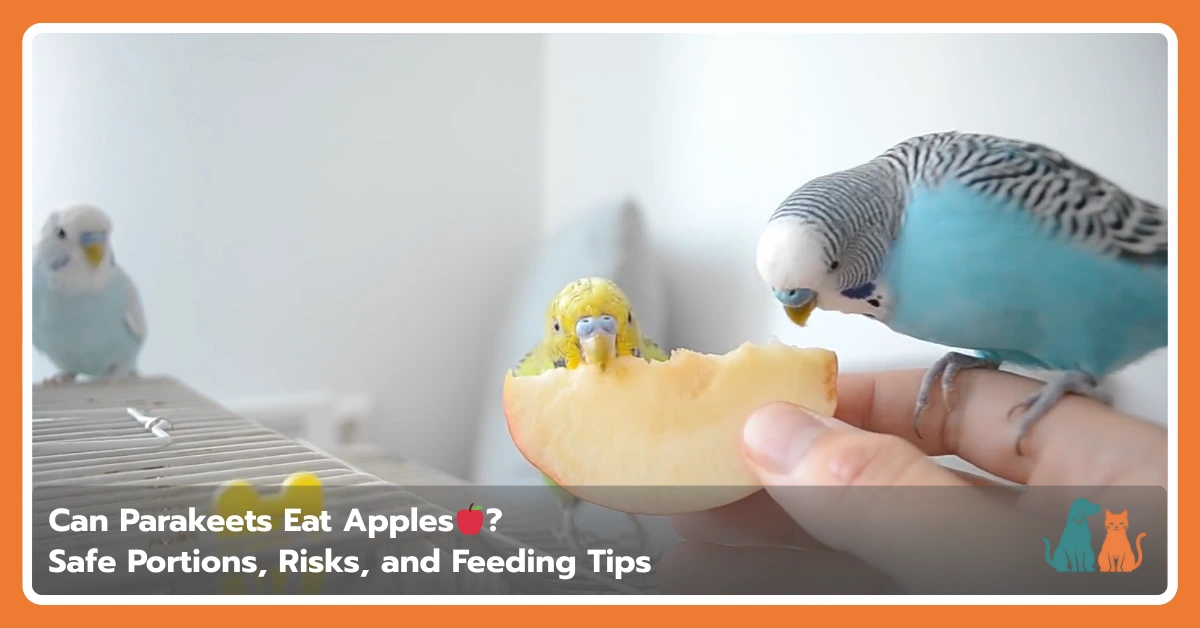
Sharing fresh fruit with a parakeet often feels like a healthy choice. Apples are crisp, familiar, and easy to portion, which makes many bird owners wonder if they belong in a parakeet’s diet. While apples are not toxic, parakeets have very specific nutritional needs, and even common fruits can cause issues if served incorrectly. Knowing how to prepare apples, how much to offer, and when to avoid them helps protect long-term digestive and metabolic health.
Can Parakeets Eat Apples?
Yes, parakeets can eat apples, but only in moderation. Fresh apples are safe for healthy parakeets when the seeds and core are completely removed and portions remain small. Apples provide hydration and fiber, but they also contain natural sugars that can contribute to weight gain or digestive upset if fed too often. Apples should be treated as an occasional treat, not a daily food.
Nutritional Content of Apples for Parakeets (per 100g)
| Nutrient | Amount (per 100g) | Notes for Parakeets |
|---|---|---|
| Vitamin C | ~4.6 mg | Supports immune function in small amounts |
| Fiber | ~2.4 g | Aids digestion when portions are limited |
| Potassium | ~107 mg | Supports muscle and nerve function |
| Vitamin A (trace) | Small amount | Supports skin and feather health |
| Water | ~86% | Adds hydration but may soften droppings |
| Natural sugars | ~10 g | Excess increases obesity risk |
Because parakeets are small birds with low-calorie needs, even a few bites of apple deliver a meaningful sugar load.
Health Effects of Feeding Apples to Parakeets
When offered occasionally and in very small portions, apples may provide a few gentle benefits. These effects depend entirely on moderation and should never outweigh the importance of a balanced diet.
- Hydration support
Apples are mostly water, which can help support hydration, especially in warm environments or dry indoor air. - Digestive support in small amounts
The fiber content can support normal gut movement, but larger portions may cause loose droppings. - Natural enrichment
The crisp texture encourages beak use and curiosity, supporting mental stimulation when offered occasionally. - Dietary variety
Rotating safe fruits prevents boredom and reduces the risk of overexposure to any single food.
How to Feed Your Parakeet Apples Safely
Feeding apples safely requires careful preparation. Proper handling reduces the risk of choking, toxin exposure, and digestive upset.
Preparing Apples Safely for Parakeets
- Wash thoroughly to remove waxes and pesticide residue
- Remove seeds and core completely, as apple seeds contain compounds that are unsafe for birds
- Peel if preferred, especially for birds sensitive to skins
- Cut into very small pieces to prevent choking
- Avoid dried or sweetened apples, which concentrate sugar
Only fresh, plain apple flesh should be offered.
Serving Ideas for Apples to Parakeets
- Freshly diced pieces placed in a food dish
- Foraging enrichment by clipping a tiny piece to a toy
- Rotational feeding with other safe fruits to limit sugar exposure
Apples should always be removed after a short period to prevent spoilage.
How Much Apple Can Parakeets Eat?
Portion size matters more than food choice. Even healthy fruits can cause problems if portions are too large.
Recommended Portion Sizes for Parakeets
- Small parakeets: One or two pea-sized pieces
- Larger parakeets: Up to two or three pea-sized pieces
Using tools like a Parakeet Nutrition Calculator can help visualise how quickly treats add up across the day.
How Often Can Parakeets Eat Apples?
- Occasional treat only: One to two times per week
- Not a daily food: Frequent fruit feeding increases obesity risk
Sugary fruits should never crowd out staple foods.
Do Parakeets Like Apples?
Many parakeets enjoy apples. The mild sweetness and crunch often make them appealing. Still, preference should never guide feeding decisions. Birds naturally gravitate toward sweet foods, which makes portion control essential.
Healthy Alternatives and Expert Recommendations
Offering variety supports enrichment without relying heavily on sugary fruit. A balanced approach protects physical health and mental stimulation, consistent with guidance found in the Best Parakeets Food Guide.
Safer Fruit and Vegetable Alternatives for Parakeets
- Lower-sugar fruits: Blueberries, raspberries, strawberries
- Vegetables: Carrots, broccoli florets, bell peppers, leafy greens
All alternatives should be offered in moderation.
Vet-Recommended Commercial Treats for Parakeets
- Seed-limited formulated bird treats
- Vegetable-based foraging treats
- Plain dehydrated vegetables without added sugars
Always read ingredient labels carefully.
Expert Tips for Feeding Parakeet Treats Responsibly
From a veterinary nutrition perspective, treats should make up no more than five percent of a parakeet’s total diet. The foundation should always be a complete, formulated parakeet diet paired with fresh vegetables and clean water.
Introduce new foods gradually and monitor droppings, appetite, and behaviour. Digestive changes often appear within 24 hours.
Parakeets with obesity, liver disease, or metabolic concerns may need stricter limits or complete avoidance of fruit. Individual health always comes first, and veterinary guidance is essential when concerns arise.
Key Takeaways
Can parakeets eat apples? Yes, but only in moderation. Apples can provide hydration, fiber, and enrichment, but their natural sugar content requires careful portion control.
Always remove seeds and cores, cut apples into very small pieces, and offer them no more than once or twice per week. When fed thoughtfully, apples can remain a safe, enjoyable occasional treat without disrupting nutritional balance.
Frequently Asked Questions
Can parakeets eat apple seeds?
No. Apple seeds should always be removed before feeding.
Are apples good for parakeets?
They can offer mild benefits when fed sparingly, but they are not nutritionally essential.
Can parakeets eat green apples?
Yes, but they are more acidic and should be offered in very small amounts.
Can baby parakeets eat apples?
No. Young birds should not receive fruit until fully weaned and eating a balanced diet.
What should I do if my parakeet has loose droppings after eating apples?
Stop fruit feeding and consult an avian veterinarian if symptoms persist.
