

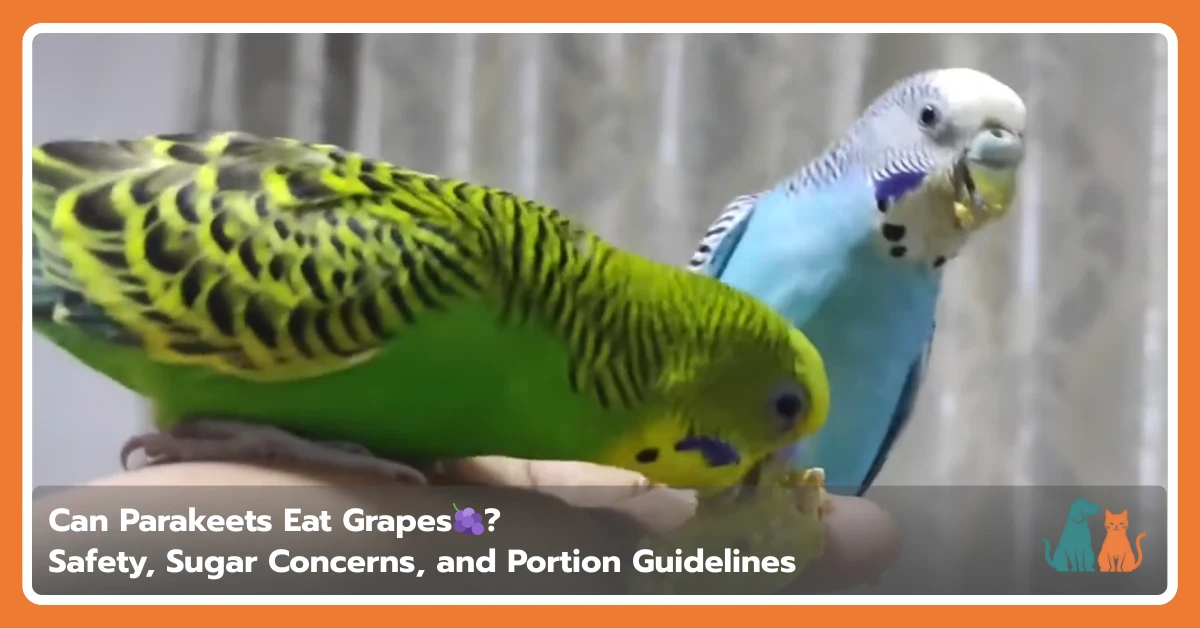
Sharing fresh fruit with a parakeet can feel like a healthy and enriching choice. Grapes are juicy, soft, and naturally appealing, which often makes them one of the first fruits bird owners consider. While grapes are not toxic to parakeets, they still require careful portion control. Birds process sugar differently from humans, and even safe fruits can cause health issues if overfed.
Understanding how grapes fit into a balanced parakeet diet helps protect long-term digestive and metabolic health.
Can Parakeets Eat Grapes?
Yes, parakeets can eat grapes in moderation. Fresh grapes are safe and non-toxic for parakeets when properly prepared and offered in small amounts. They provide hydration and small amounts of vitamins, but they are also naturally high in sugar.
Grapes should always be considered an occasional treat, not a daily food. They should never replace a nutritionally complete, species-appropriate parakeet diet.
Nutritional Content of Grapes for Parakeets (per 100g)
| Nutrient | Amount (per 100g) | Notes for Parakeets |
|---|---|---|
| Vitamin C | ~10 mg | Supports general cellular health |
| Vitamin K | ~14.6 mcg | Important for normal blood clotting |
| Fiber | ~0.9 g | Low fiber; excess fruit may still upset digestion |
| Potassium | ~191 mg | Supports nerve and muscle function |
| Water | ~81% | Helps with hydration |
| Natural sugars | ~15 g | High sugar load for a small bird |
Because parakeets are small, even a single grape can represent a significant portion of their daily sugar intake.
Health Effects of Feeding Grapes to Parakeets
When offered occasionally and in appropriate portions, grapes may provide a few gentle benefits. These effects rely entirely on moderation.
- Hydration support
Grapes have a high water content, which can help support hydration, especially in warmer environments. - Natural enrichment
The texture and juiciness encourage exploration and foraging behavior, supporting mental stimulation. - Micronutrient contribution
Grapes offer small amounts of vitamins and antioxidants, though these are not essential when a balanced diet is provided.
Overfeeding grapes can quickly outweigh any benefit and contribute to excess calorie intake.
How to Feed Your Parakeet Grapes Safely
Safe feeding depends on preparation, portion size, and frequency. Poor handling can increase choking risk or digestive upset.
Preparing Grapes Safely for Parakeets
- Wash thoroughly to remove pesticide residue
- Use seedless grapes only
- Cut into very small pieces to prevent choking
- Serve fresh, never dried or sweetened
Avoid raisins entirely, as dried grapes are too concentrated in sugar for birds.
Serving Ideas for Grapes to Parakeets
- Small chopped pieces mixed into fresh food bowls
- Hand feeding to monitor intake
- Occasional rotation with other safe fruits
Any uneaten grape pieces should be removed within a few hours to prevent spoilage.
How Much Grape Can Parakeets Eat?
With fruit, portion size matters more than variety.
Recommended Portion Sizes for Parakeets
- One to two small grape pieces, no larger than a pea
- Pieces should be finely chopped rather than offered whole
Smaller parakeets may need even less.
How Often Can Parakeets Eat Grapes?
Grapes should remain an occasional treat for parakeets, not a routine food. While they are safe in small amounts, their natural sugar content makes frequent feeding inappropriate for daily diets.
- Occasional treat only: One to two times per week is sufficient for most healthy parakeets
- Not a daily food: Regular fruit feeding can contribute to excess calorie intake and unwanted weight gain
Fruit should make up only a small portion of a parakeet’s overall diet. Tools like a Parakeet’s Calorie Calculator can help visualise how quickly sugary treats add to daily energy intake and support better portion awareness.
Do Parakeets Like Grapes?
Many parakeets enjoy grapes because of their sweetness and juiciness. However, preference should never guide feeding decisions. Birds often favour sugary foods, which can lead to imbalanced diets if limits are not enforced.
Healthy Alternatives and Expert Recommendations
A varied diet supports both physical health and mental stimulation without relying heavily on sugary fruit. Long-term nutrition is best supported by prioritising vegetables, balanced pellets, and controlled treat portions, as outlined in a Best Parakeets Food Guide.
Safer Fruit and Vegetable Alternatives for Parakeets
When offering fresh foods, vegetables should always make up a larger portion than fruit.
- Lower-sugar fruits: Blueberries, strawberries, raspberries
- Vegetables: Leafy greens, carrots, broccoli, bell peppers
Vegetables provide fiber, vitamins, and enrichment with far less sugar, making them a better daily option than fruit.
Vet-Recommended Commercial Treats for Parakeets
- High-quality seed mixes used sparingly
- Pellet-based bird treats
- Plain dried vegetables without added sugars
Pellets should remain the foundation of the diet, supplemented with fresh foods.
Expert Tips for Feeding Parakeets Treats Responsibly
From a veterinary nutrition perspective, treats and fruit should make up no more than ten percent of a parakeet’s total diet. The majority should come from a complete pelleted food formulated for parakeets, along with daily access to fresh water.
Introduce new foods gradually and monitor droppings, appetite, and behaviour. Digestive changes often appear quickly in birds.
Parakeets with obesity, liver disease, or other health concerns may need stricter limits on fruit. Veterinary guidance is always recommended when health issues are present.
Key Takeaways
Can parakeets eat grapes? Yes, but only in moderation. Grapes are safe when properly prepared and offered in small amounts, but their high sugar content means they should remain an occasional treat.
Always wash grapes thoroughly, use seedless varieties, cut them into small pieces, and limit frequency. A balanced diet built around pellets and vegetables is far more important than fruit variety.
Frequently Asked Questions
Can parakeets eat grapes every day?
No. Daily grape feeding increases the risk of excess sugar intake and weight gain.
Are grapes healthy for parakeets?
They offer hydration and small amounts of vitamins, but they are not nutritionally essential.
Can parakeets eat red and green grapes?
Yes. Both are safe as long as they are seedless and served in small portions.
Can baby parakeets eat grapes?
Fruit should be introduced cautiously and in very small amounts once birds are fully weaned.
What should I do if my parakeet has loose droppings after eating grapes?
Stop feeding fruit and consult an avian veterinarian if symptoms persist.
